
BONNETS & DRIVE PADS
FOR ORBITAL POLISHERS
FOR ORBITAL POLISHERS
BuffingPads
Generally, we manufacture two types of buffing pads. Within these two groups are sub groups of buffing pads that are
different in respect to their composition, size and design. The two main buffing pad groups are wool and foam pads.
Wool Buffing Pads
One category are buffing pads made from wool. There are also blended pads; that is pads that have a mix of wool and
synthetic materials. Depending on the purpose, wool can be spun into various yarns, some are twisted, some are not.
For example, if a customer needs a buffing pad that is aggressive, we can offer him/her a buffing pad that is 100%
twisted wool. Twisted wool is considered aggressive in terms of cutting ability. On the other hand, if a customer
wants a buffing pad for final finishing or non-aggressive polishing, we can provide yarns that are non-twisted or made
with a mixture of synthetic materials. Buffing pads can be made for a specific purpose or multipurpose. Our approach
is to simplify the buffing system and we also suggest working with various car care chemicals, such as compounding,
polishing and finishing products. There is an obvious relationship between buffing pads and polishing compounds. It
takes time to learn how these products work with each other. One thing is certain: wool is becoming more popular as
paints are required to contain more solids and fewer solvents. Wool is simply the faster medium when compared to
foam pads, it cuts quicker. Foam pads play a major role in buffing as well. Generally, foam is considered most useful
when finishing. The rule of thumb is to start with a wool buffing pad and finish with a foam pad. Call customer service
at 800 659 2833 to purchase or learn about wool buffing pads.
Foam Buffing Pads
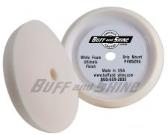
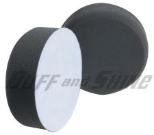
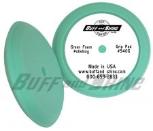
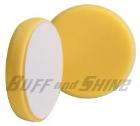
The second category of buffing pads we manufacture are foam pads. Unlike wool pads, there are no blended foam
buffing pads. Foam pads are 100% foam, but they perform slightly different from each other on the basis of how they’
re constructed. Under a microscope, foam pads look like a bee’s honeycomb, small uniformly shaped cells. The
smaller the cells the more densely the construction, this type of foam pad would be considered less aggressive, thus it
would be considered a finishing pad. The opposite effect takes place if the foam cells were larger, or less dense. This
construction will cause the foam pad to be more aggressive, as in a compounding pad. There are various grades of
foam pads on either side of the aggressive or finishing scale. We make up to six grades of foam pads; each
represented by a different color. Early on, foam buffing pad colors were standardized, however, more colors were
added to the mix and now there is a broad band or examples. Yellow, black and white are the most common colors
across the board; however, our own range of colors has expanded to include blue and green. We make many different
size and configurations of foam buffing pads, ranging from 3” to 8”. Our recognized labels such as center tee,
ventilated or standard dome shape faced foam pads come to mind. No job is too big or to small; we have the right
selection with quality to match. All of our pads are made of high strength reticulated foam. In other words, the cells are
open; this allows air to flow through the foam. Chemical compounds and polishes require the right amount of air flow
through the foam. Open cell foam is ideal for this process to succeed. Not only is closed cell foam not ideal, it is
weaker structurally.
European Foam Pads
Playing a minor role in the foam pad mix are the Euro foam pads, at least here in the USA. The main difference
between American made foam pads and European foam pads was the size, density and firmness of the foams. Euro
foams are generally smaller, approximately 6” diameter on average. In Europe, detail shops are a rare find; most
buffing is done on small panel repair at the body shop level. However, this is changing with the rising popularity of
independent service stations offering detailing. Furthermore, European paint has traditionally been high solid low
solvent compositions; their foam pads worked well under their physically restrictive conditions. The transition to
conform to the new and ever changing environmental laws here was difficult at first, but technology caught up and
eventually the impact on us was the discovery our wool pads worked wonderfully on the new paint, better than
European foams, especially with the initial cut.
Generally, we manufacture two types of buffing pads. Within these two groups are sub groups of buffing pads that are
different in respect to their composition, size and design. The two main buffing pad groups are wool and foam pads.
Wool Buffing Pads
One category are buffing pads made from wool. There are also blended pads; that is pads that have a mix of wool and
synthetic materials. Depending on the purpose, wool can be spun into various yarns, some are twisted, some are not.
For example, if a customer needs a buffing pad that is aggressive, we can offer him/her a buffing pad that is 100%
twisted wool. Twisted wool is considered aggressive in terms of cutting ability. On the other hand, if a customer
wants a buffing pad for final finishing or non-aggressive polishing, we can provide yarns that are non-twisted or made
with a mixture of synthetic materials. Buffing pads can be made for a specific purpose or multipurpose. Our approach
is to simplify the buffing system and we also suggest working with various car care chemicals, such as compounding,
polishing and finishing products. There is an obvious relationship between buffing pads and polishing compounds. It
takes time to learn how these products work with each other. One thing is certain: wool is becoming more popular as
paints are required to contain more solids and fewer solvents. Wool is simply the faster medium when compared to
foam pads, it cuts quicker. Foam pads play a major role in buffing as well. Generally, foam is considered most useful
when finishing. The rule of thumb is to start with a wool buffing pad and finish with a foam pad. Call customer service
at 800 659 2833 to purchase or learn about wool buffing pads.
Foam Buffing Pads
The second category of buffing pads we manufacture are foam pads. Unlike wool pads, there are no blended foam
buffing pads. Foam pads are 100% foam, but they perform slightly different from each other on the basis of how they’
re constructed. Under a microscope, foam pads look like a bee’s honeycomb, small uniformly shaped cells. The
smaller the cells the more densely the construction, this type of foam pad would be considered less aggressive, thus it
would be considered a finishing pad. The opposite effect takes place if the foam cells were larger, or less dense. This
construction will cause the foam pad to be more aggressive, as in a compounding pad. There are various grades of
foam pads on either side of the aggressive or finishing scale. We make up to six grades of foam pads; each
represented by a different color. Early on, foam buffing pad colors were standardized, however, more colors were
added to the mix and now there is a broad band or examples. Yellow, black and white are the most common colors
across the board; however, our own range of colors has expanded to include blue and green. We make many different
size and configurations of foam buffing pads, ranging from 3” to 8”. Our recognized labels such as center tee,
ventilated or standard dome shape faced foam pads come to mind. No job is too big or to small; we have the right
selection with quality to match. All of our pads are made of high strength reticulated foam. In other words, the cells are
open; this allows air to flow through the foam. Chemical compounds and polishes require the right amount of air flow
through the foam. Open cell foam is ideal for this process to succeed. Not only is closed cell foam not ideal, it is
weaker structurally.
European Foam Pads
Playing a minor role in the foam pad mix are the Euro foam pads, at least here in the USA. The main difference
between American made foam pads and European foam pads was the size, density and firmness of the foams. Euro
foams are generally smaller, approximately 6” diameter on average. In Europe, detail shops are a rare find; most
buffing is done on small panel repair at the body shop level. However, this is changing with the rising popularity of
independent service stations offering detailing. Furthermore, European paint has traditionally been high solid low
solvent compositions; their foam pads worked well under their physically restrictive conditions. The transition to
conform to the new and ever changing environmental laws here was difficult at first, but technology caught up and
eventually the impact on us was the discovery our wool pads worked wonderfully on the new paint, better than
European foams, especially with the initial cut.
 | |  |
 | |  | |  | |  | |  |